 Cookie



What a coolcation looks like in Transylvania
The increasing heatwaves in Europe have skyrocketed searches for cooler summer destinations by 74% year on year, with the map of a comfortable European summer being redrawn in real time. Iceland, Norway, Finland and Greenland have absorbed most of that movement.
But, they have also absorbed the consequences. Greenland's summer tours have been booking out to capacity, Nordic rates are climbing with demand, and the crowd pressure people were escaping from has followed them north into the smaller towns and ports.
This guide is about a different answer to the same problem, and it starts with a re-definition. Coolcation has come to mean Northern Europe, but in Transylvania it means something else: a summer that runs long and stays comfortable, in a region where the altitude does the work. We have been building this kind of summer for more than 20 years, well before there was a word for it.
Quick snapshot: a Transylvanian summer in 60 seconds
- What it is not: a 15°C destination, though it may occasionally drop in the 20s during rainy days. Anyway, who actually wants 15° in summer?
- Summer daytime average: around 25°C in Brasov at around 600m altitude, go higher in Poiana Brasov or Bran and it’ll drop even further
- What makes the difference: nights that drop to 12 or 13°C, forest cover and altitude
- Best months: June, July and September, with September the strongest of the three
- What to do here: walking and cycling between Saxon villages, mountain hiking in the Carpathians, craft workshops, long lunches with the locals
- The headline route: Via Transilvanica, with two sections running through Brasov county
- Access: Brasov-Ghimbav International Airport, with direct European connections to most European hubs (London, Milan, Rome, Madrid, Barcelona, Budapest, Warsaw, Dortmund & more)
- Where to sleep: restored Saxon houses, secluded estates and boutique mountain guesthouses
The climate in Transylvania during summer
Any destination can call itself cool nowadays depending what you compare it with, so here are the numbers.
Brasov sits at around 600m, and in August, its warmest month, it averages a daytime high of 25°C. Poiana Brasov, the mountain resort 12km uphill at roughly 1,000m, averages 24°C. Recent summers have run hotter as heatwaves reach further across the continent, but the relative position holds. That is level with Warsaw, and below Vienna at 27°C, Split at 27°C, Rome at 28°C or Milan at 29°C. Also, southern Romania is a different country climatically, with Bucharest averaging 31°C in the same month.
So this is not Oslo or Stockholm, which sit closer to 21°C.
But what Transylvania offers instead is nighttime temperatures around 15 or 16°C, which means people sleep properly, eat outside comfortably, and can start their day at eight in the morning in fresh crisp air. Add dense forests, river valleys and panoramic peaks, making the practical experience of a summer day considerably cooler than the daytime average suggests. Think the Dolomites or the Alps with less crowds - pretty cool, no?
Best time to visit Transylvania during summer
Romanian summer runs from June through September, which means the season is longer here than the two-month window most of Europe works with. Within it, we point clients at June, July and September.
June

It brings the longest days of the year, wildflower meadows at their peak and hills that are bright green. It is also the wettest month in the Carpathians, with rain falling on roughly half the days and afternoon storms common in the mountains, so it suits programmes with flexibility built in and for clients who don’t mind getting a bit wet if that promises the view of a rainbow crossing over the hills.
July
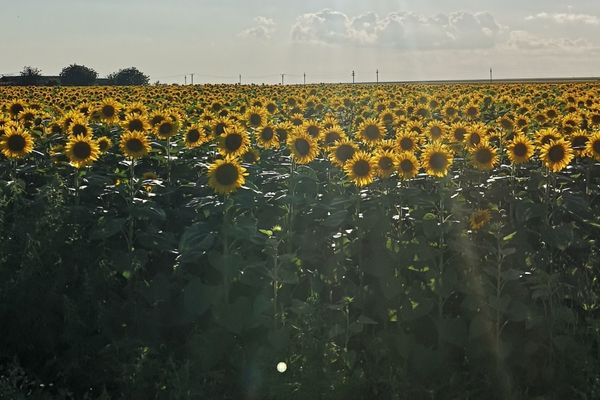
It is drier and settled, the best month for anything involving high ground or a fixed schedule, and the long evenings hold until well past 9pm. It’s still not as busy as August, the peak of national and international travel in Romania, which we’d quite frankly avoid if you’d like to offer your clients a truly exceptional experience.
September
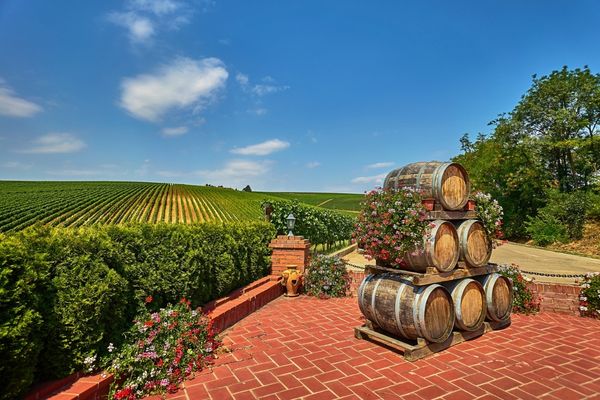
It is the one we push hardest. The harvest is on across the villages, the light turns warmer, the trails are at their driest and the walking is at its best. You can still catch the sunset till 8pm and everything will feel lighter and less crowded. The true definition of luxury we think.
Via Transilvanica: the road that unites
Romania now has its own camino, truly competing with the other more popular long-distance trails in the world.
Via Transilvanica runs 1,600km from Putna, in the north-east of Romania, to Drobeta-Turnu Severin on the Danube, at the south-west corner, crossing 10 counties and historical regions. Each km is marked in carved andesite stones made by different artists, making the trail one of the longest outdoor art galleries in the world.
It won the Public Choice Award at the European Heritage Awards in 2023 and drew more than 30,000 walkers in 2024 alone, putting it on Nat Geo’s Best of the World list in 2025.
Two of its sections matter most to us, and both are within reach of Brasov.
Terra Saxonum
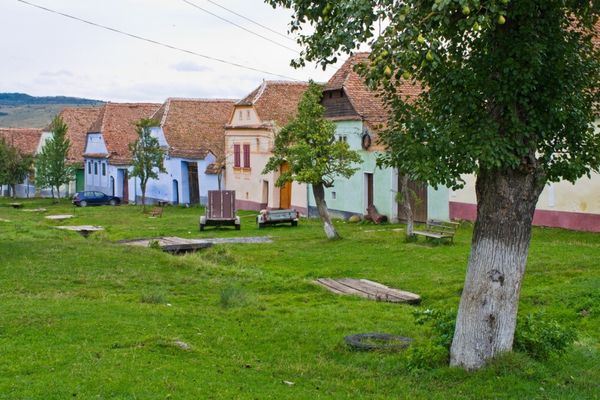
It crosses the historic Saxon lands of Brasov, Mures and Sibiu counties, linking villages built around fortified churches, with farmland, wildflower pasture and oak forest in between. This is the section that delivers the concentrated version of what people picture when they think of Transylvania.
Terra Borza Teutonica
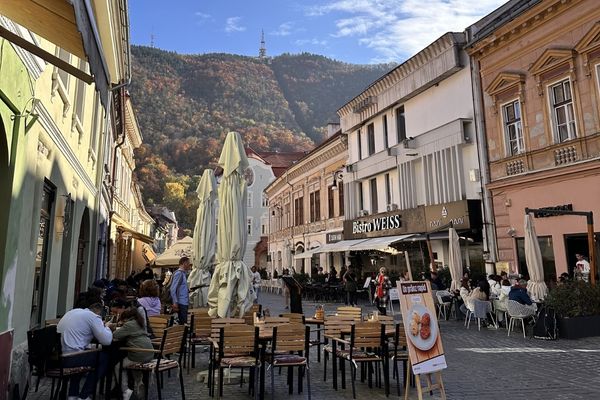
It is newer, just inaugurated in June 2025 as the first extension of the main route, running from Viscri down through Bran, Rasnov and finishing in Brasov. It takes its name from the Teutonic knights who held the Burzenland in the 13th century, and it passes beneath the Piatra Craiului and Bucegi mountain ranges for much of its length.
Brasov is now the trail's third official entry point, after Putna and Drobeta-Turnu Severin, and with the international airport only 15 minutes from the city, clients can land in the morning and be already on the route that same afternoon, which is not something the trail's other entry points can offer.
The centuries-old villages of Transylvania
The Saxon villages of Transylvania
They were settled in the 12th century, when King Géza II of Hungary invited settlers from the Rhineland, the Moselle and Flanders to hold and farm the southern frontier of his kingdom. They built distinctive villages from the rest of Romania’s settlements, with a single long street of coloured houses, with interior gardens, barns and orchards behind. In the centre, there was a church-citadel fortified against Ottoman and Tatar raids, with storage towers where each family kept bacon and grain through a siege.
Seven of these villages are inscribed on the UNESCO World Heritage list due to this, among them Viscri, Biertan, Prejmer, Saschiz and Valea Viilor. Viscri is the best known internationally, partly because King Charles III owns a house there and visits it often.
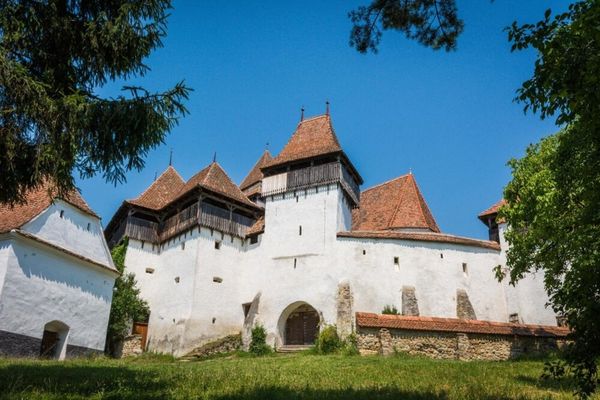
However, the reason these villages have been kept largely untouched is actually less romantic than it sounds. The Saxon population was pushed out of Transylvania by communists during the 1940s post WW2, and the villages emptied rather than modernised.
But what seemed like neglect for decades is now preservation. Many Saxon descendants and culture lovers have since carefully restored historic houses into locally run guesthouses, opened coffee shops and organised local festivals in celebration of Saxon heritage.
The mountain villages of the Carpathians
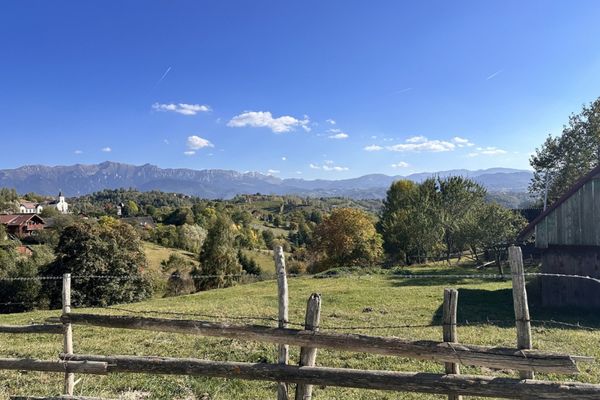
Move closer to Brasov, and you can also find the mountain villages of Bran, Moieciu, Magura, Pestera, Fundata, Simon or Sirnea. Because of their proximity to Bran Castle, they have become among Romania’s best rural destinations, many offering not only family-run guesthouses and restaurants, but also mountain resorts, sports facilities, secluded retreats and panoramic views of the mountains, with a wide range of local activities available.
What a week in Transylvania looks like in summer
Below are some of the walking, hiking and cycling daily trips we built, with flexible pacing and effort levels, that cover the best between Transylvania’s must-see attractions and local experiences.
Walking between the Saxon villages
On the Via Transilvanica, these sections typically cover a moderate distance each day over rolling terrain, with no exposure and no technical ground. It suits anyone reasonably fit and is comfortably within reach of a group that has never done a walking holiday before.
Check out Walking Trip: The Saxon Trail from Mesendorf to Viscri
Mountain hiking in the Carpathians
Piatra Craiului, the Bucegi plateau, the Zarnesti gorge and the ridges above Poiana Brasov all sit within half an hour of Brasov, which means a programme can alternate gentle village days with a serious mountain day without relocating.
Check out Easy Hike: In the heart of Piatra Craiului
Cycling and e-biking

These work particularly well across the Saxon plateau, where the distances between villages suit 1-2 days’ riding and the gradients are manageable. E-bikes have widened this considerably for mixed-ability groups.
Check out Bike in Transylvania: The Route of Saxon Villages
Local experiences
These can be woven through the days rather than added at the end:
- Craft workshops including cooking, weaving, pottery and traditional woodwork
- Gastrolocal meals with the family who cooked them using seasonal produce
- The UNESCO fortified churches explained by the people who look after them
- Wildlife, including bear watching, bird watching or bison watching
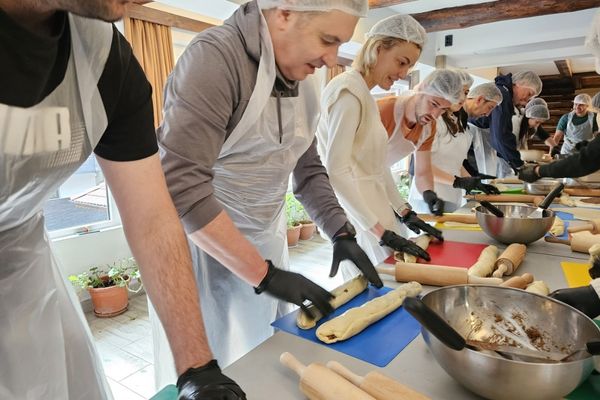
A 7-day Transylvanian summer
So, a sample itinerary for a week-long summer holiday in Transylvania could look like:
- Days 1-3, the Carpathians: Brasov old town visit, a mountain hike or cycle in Piatra Craiului or the Bucegi mountains, a visit at Bran Castle and bear watching
- Days 4-5, the Saxon land: a walk between the villages, visits to the fortified churches, a gastrolocal lunch and a workshop with a local craftsman
- Days 6-7, Sighisoara and back: visit the UNESCO citadel, then a cycling or walking day through the surrounding hills, a local winery or distillery visit and farewell dinner
Where to stay
The widely available accommodation options can cater to clients who want authenticity without giving up comfort.
Restored Saxon houses
Casa Kraus in Crit is the former parish house of Johannes Kraus, the village priest, rebuilt to its original plans with hand-painted furniture restored by craftsmen in the surrounding villages.
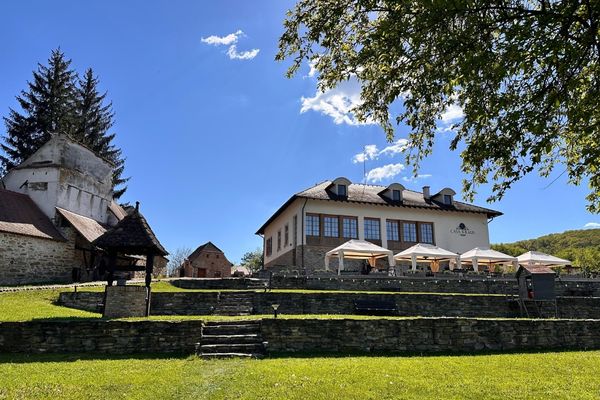
A few kilometres away, Mesendorf Gasthaus occupies traditional Saxon households arranged around a generous inner courtyard, with the tall wooden ceilings kept and the comfort brought up to date.
Both sit in the Haferland, the cluster of Saxon villages around Viscri and Bunesti, which is where the Terra Borza Teutonica section of the Via Transilvanica begins.
Secluded estates
Bethlen Estates is the clearest example, a heritage property in the Saxon hills, close to Sighisoara, restored and holder of two MICHELIN Keys.
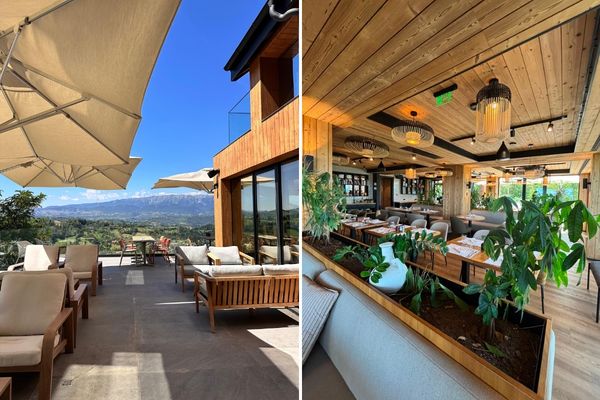
Closer to Bran, The Pines Bucegi Lodge sits at 1,010m with 16 rooms opening onto terraces that face the forest and the ridges of Piatra Craiului, and its restaurant, Spice, works with local produce and Romanian wines. It is one of Romania's newest additions to the MICHELIN Guide.
Traditional mountain guesthouses
Pensiunea Andolia, at 1,100m in the Andolia valley beneath the Bucegi and Piatra Craiului ranges, is a small hamlet of wooden houses evoking the local architecture, with a sauna and hot tub.
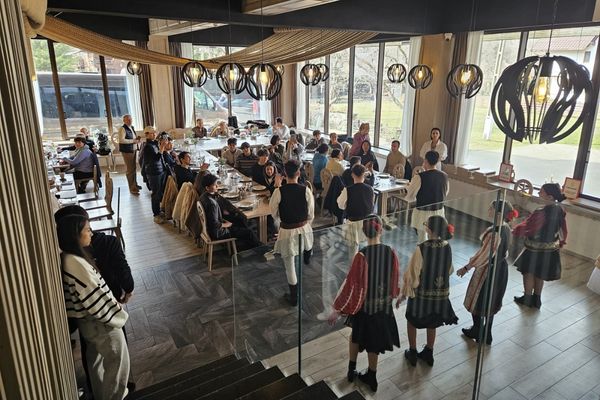
Mama Cozonacilor, six km away from Bran Castle, is where the same family has been baking since 1996. Meals come from their own homemade recipes and the in-house bakery and, because cozonac is the family trade, clients can do here cozonac-making workshop to learn all the secrets behind Romania's celebration bread.
Unique stays
Odai din Plai in Fundata is a set of four rooms at the edge of the forest, built from raw wood and stone in an architecture that reminds of the hobbit houses.
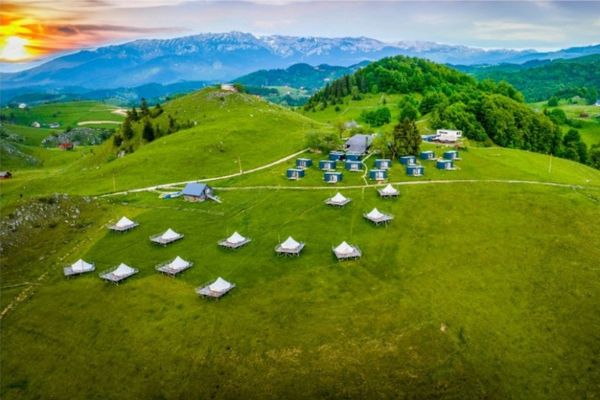
Ursa Mica Glamping Resort, on a hilltop above Sirnea at 1,250m, is aso one of the first glamping sites in Romania, with luxury tents and bungalows facing the mountains in every direction, and a sauna and hot tub for after the walking.
The common thread across all four is that these are locally and family-run, so your clients can get a fully authentic and local experience from someone living there.
Getting here
Brasov-Ghimbav International Airport connects already directly to some of Europe’s largest hubs: London, Rome, Milan, Budapest, Warsaw Dortmund and Nuremberg.
From November and December 2026, Valencia, Barcelona, Madrid, Karlsruhe/Baden-Baden and Chisinau will be joining too with weekly flights:
- Valencia, from 3 November, 3x weekly, 3h30 flight time
- Chisinau, from 17 December, 3x weekly, 55 minutes flight time
- Barcelona, from 18 December, 2x weekly, 3h10 flight time
- Karlsruhe/Baden-Baden, from 18 December, 2x weekly, 2h25 flight time
- Madrid, from 20 December, 2x weekly, 3h50 flight time

Bucharest's Henri Coanda International Airport is also a 2.5-3h drive away for intercontinental arrivals, and Sibiu, Targu Mures and Cluj-Napoca offer further access points to the western Saxon villages.
The Chisinau connection particularly at 55 minutes flight time only also makes a combined Transylvania and Republic of Moldova itinerary practical for the first time ever.
Planning a cooler summer?
Send us your dates, group size and how active your clients are, and we will come back with a route, a set of stays and a first budget frame.